
All Articles Published in This Journal Are Now Indexed in Scopus
All articles published in this journal are now indexed in the international citation database Scopus. The inclusion of this journal in Scopus is expected to strengthen Iran’s scientific standing in the region.
He added: “I would like to express my special appreciation to Dr. Ramin Salmati, whose open-minded and forward-looking perspective led him to support the idea of establishing this journal from the very beginning. His presence and support alongside us were among the key factors behind the journal’s success.”
At a time when many Iranian scientific journals are facing challenges such as reduced governmental support, financial constraints, and the complexities of international indexing processes, a promising development has drawn attention in the fields of veterinary medicine and poultry sciences: the indexing of the specialized journal Poultry Science and Avian Diseases in the prestigious international database Scopus.
According to Hakim Mehr News Agency, although only two years have passed since the journal’s establishment, it has managed to enter one of the world’s most reputable scientific indexing systems without relying on governmental funding. Instead, it has been founded and operated entirely through private sector investment. This rare achievement is commendable and serves as an inspiring model.
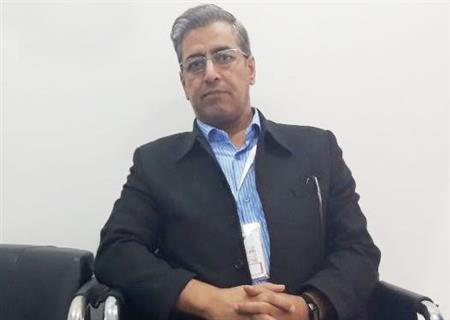
The journal is edited and managed by Dr. Jamshid Razmyar, a distinguished expert in poultry and avian diseases. By leveraging national and international scientific capacities, maintaining effective interaction with universities and researchers worldwide, and strictly adhering to scientific and ethical publishing standards, he has successfully guided the journal through the challenging indexing process in a remarkably short period.
Notably, all articles published since the first issue of the journal are indexed in Scopus, further enhancing its scientific credibility and international impact.
This success has been achieved through scientific networking involving leading experts from around the world as editorial board members, reviewers, and authors, as well as by utilizing the full intellectual capacity of the country in journal indexing. This process reflects a genuine improvement in scientific diplomacy indicators and represents an important step toward strengthening the international scientific authority of the Islamic Republic of Iran. Beyond elevating Iran’s standing in veterinary science, this achievement offers an effective model for private-sector participation in advancing scientific production and improving the quality of national academic journals.
In an interview with Hakim Mehr, Dr. Jamshid Razmyar discussed the challenges faced along the way, the key role of colleagues and scientific advisors, the journal’s current position, future plans for inclusion in databases such as ISI and PubMed, and the impact of this achievement on improving Iran’s regional scientific ranking. He believes this success could pave the way for Iran’s return to the leading position in international veterinary publications in the region and transform private-sector participation into a major driver of scientific progress.
He emphasized: “I would like to extend my special thanks to Dr. Ramin Salmati, whose visionary support for the establishment of the journal from the outset was one of the key elements of its success.”
Hakim Mehr: Dr. Razmyar, what specific academic achievement has been realized in the field of poultry sciences in Iran?
Two years ago, the journal Poultry Science and Avian Diseases was launched as the first journal in this field to be fully funded by the private sector. We encountered numerous challenges, including rising paper costs that pushed many academic journals toward online-only publication. Publishing expenses, particularly for high-standard articles, are substantial and consume a significant portion of research budgets. Establishing a scientific journal without governmental support or formal incentives is extremely difficult. However, persistent efforts ensured that the journal reached a level of quality that allowed it to attract valuable manuscripts based solely on merit.
Hakim Mehr: How did you gain the trust of the scientific community without academic credit points?
Fortunately, trust was established early on. Professors from Iranian universities and Iranian researchers at leading international institutions supported the journal from the beginning. These connections, built on prior academic collaborations, resulted in the submission of high-quality manuscripts. Additionally, conferences, webinars, and specialized workshops played an important role in introducing the journal and shaping its vision. Collaboration with internationally renowned scholars such as Professors Hafez Mohamed Hafez, David Swayne, Fereidouni, Nourmohammadzadeh, and Michael Hess significantly enhanced the journal’s credibility.
Hakim Mehr: Which advisors contributed to achieving international standards?
This success would not have been possible without expert consultation. Dr. Taheri, advisor to the former Minister of Science, along with Dr. Irandoust and Dr. Kabiri, played crucial roles. As a result, the journal achieved an “A” ranking in its first official evaluation by the Ministry of Science.
Hakim Mehr: Scopus indexing usually takes years. How did you achieve it so quickly?
In the second year, the journal gained wider recognition and attracted higher-quality submissions. According to national records, no Iranian journal had achieved Scopus indexing in its second year over the past five years. Despite the risks, we applied early due to our confidence in the journal’s standards, and fortunately, this bold decision paid off.
Hakim Mehr: Have you applied for ISI indexing?
Yes, we have applied simultaneously, and the evaluation process is ongoing.
Hakim Mehr: Can students submit articles?
Yes. Since obtaining the Ministry of Science’s “A” ranking, MSc and PhD students have been eligible to submit manuscripts. With Scopus indexing, published articles now receive both national and international recognition.
Hakim Mehr: Is it true that this is the first journal in Asia or the third worldwide?
No, that claim is inaccurate. There are more than 10–12 reputable journals globally in poultry diseases, though fewer than 20 specialize exclusively in this field.
Hakim Mehr: How does the peer-review process work?
We maintain a specialized reviewer database of over 500 experts worldwide. Reviewers are carefully selected based on subject expertise to ensure rigorous evaluation.
Hakim Mehr: Do you use international reviewers?
Yes, and their experience and perspectives have significantly enhanced the journal’s scientific quality.
Hakim Mehr: What are your future plans?
Our goal is indexing in PubMed and ISI and advancing toward Q1 ranking. This requires significant investment in editorial and publishing infrastructure, which has been made possible through private-sector funding.
Hakim Mehr: What are the advantages of private-sector involvement in academic publishing?
It reduces governmental financial burdens, streamlines processes, and accelerates scientific growth.
Hakim Mehr: Who played key roles in this success?
I would like to once again thank Dr. Ramin Salmati for his visionary support.
Hakim Mehr: Final remarks?
I extend my gratitude to former Minister of Science Dr. Zolfaghari, Deputy Minister Dr. Peyman Salehi, Dr. Samadnezhad Ebrahimi, Dr. Morteza Taheri, all colleagues, private-sector contributors, and especially the authors who trusted the journal from the beginning. In recent years, Iran lost its leading regional position in veterinary publications to Turkey. The inclusion of private Scopus-indexed journals like ours can help Iran regain that position.